
How to Find Property Lines Without a Surveyor
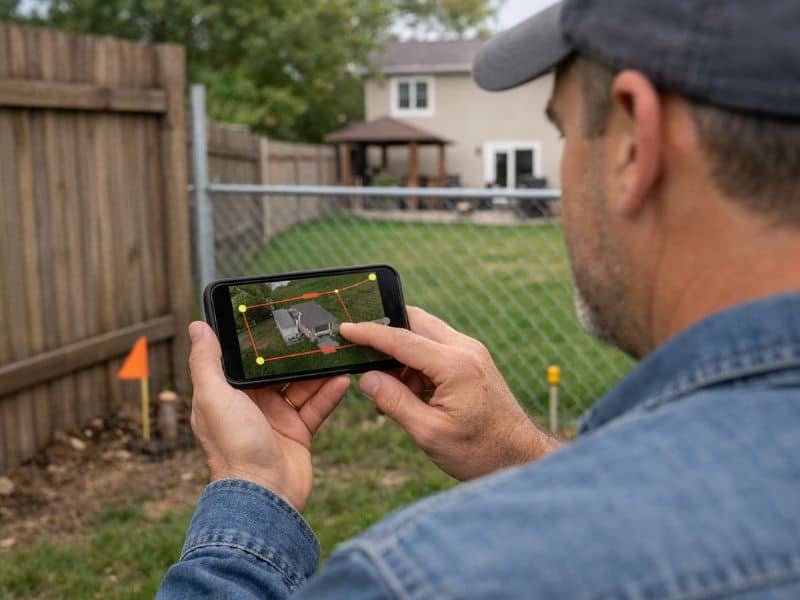
Not every situation calls for hiring a licensed surveyor right away. Sometimes you just need a general idea of where your property starts and ends before you plant a row of trees, plan a garden bed, or have a conversation with your neighbor. The good news is that several free and low-cost methods can give you a solid starting point. None of them replace a professional survey for legal purposes, but they are useful, practical, and easy to access.
Here is a clear look at five ways to find your property lines on your own.
1. Check Your Property Deed
Your property deed is the most important document you own as a landowner. It contains a legal description, which is a written set of directions and measurements that describe the exact boundaries of your land.
Legal descriptions come in a few common formats:
- Metes and bounds describe boundaries using compass directions and distances. It starts from a fixed point and traces the perimeter. This format is common in older eastern states and rural areas.
- Lot and block references a recorded plat map using a lot number and block number. This is typical in subdivisions.
- Government rectangular survey divides land into townships, ranges, and sections. This format is most common in the western United States.
Reading a legal description can feel confusing at first, but even understanding the basics helps you know where to look on a map or in the field.
To get a copy of your deed, check your closing documents from when you purchased the property. You can also visit your county recorder’s office or clerk’s office in person. Many counties now post deed records online through their official websites at no cost.
2. Look Up Your Plat Map
A plat map is an official diagram of a subdivision or parcel of land that has been recorded with the county. It shows individual lot boundaries, lot dimensions, street widths, easements, and how neighboring lots relate to one another.
Plat maps are especially helpful if your property is part of a subdivision. They are filed with the county recorder’s office and are public record, meaning anyone can view them for free.
To find yours, visit or search the website for your county recorder’s office, assessor’s office, or register of deeds. Many counties have also digitized their plat records, so a simple search for your county name along with the words “plat map” or “plat records” will often get you there quickly.
One thing to keep in mind: a plat map shows the planned or recorded boundaries at the time the plat was filed. Changes that happened after that date, such as old encroachments or structures that shifted over time, may not appear on the map.
3. Use a County GIS Parcel Map
Most counties in the United States offer a free online GIS (Geographic Information System) parcel viewer. These tools display property boundaries overlaid on aerial or satellite imagery, so you can see where your lot lines fall in relation to your home, driveway, and yard.
To find yours, search Google for your county name followed by “GIS parcel map” or “parcel viewer.” Once you are on the tool, enter your address or parcel number. Your property boundary will appear as a colored outline on the map.
GIS maps are a quick and convenient way to get a visual picture of your property. However, they carry a margin of error that can range from 5 to 30 feet depending on the county and the age of its records. They work well for general reference but are not precise enough for construction, permit applications, or legal disputes.
4. Look for Survey Pins
Survey pins are physical markers set in the ground by licensed surveyors to mark the corners of a property. They are one of the most direct ways to find a boundary line because they represent where a surveyor has already been.
Survey pins are typically made of iron rebar or iron pipe, ranging from 18 to 24 inches in length. A metal cap or tag stamped with the surveyor’s license number is often attached to the top. In some cases, orange or pink flagging tape may mark a recently set pin. Older properties may have stone monuments, concrete posts, or brass discs set into nearby sidewalks or roads.
Because pins are often buried just below the surface, they are not always visible to the naked eye. A basic metal detector set to detect ferrous metal can help you locate them. Walk along the perimeter of your property, especially near corners. Cross-referencing your search area with your plat map or deed gives you a better idea of where to look.
One important rule: never move, pull out, or reset a survey pin. In most states, disturbing a survey monument is a criminal offense and can create serious legal problems.
5. Use a Property Boundary App
Smartphone apps have made it easier than ever to view approximate property lines from wherever you are standing. Several free and low-cost apps pull parcel data from county tax assessor records and display it as an overlay on a satellite map using your phone’s GPS.
To use one, search your device’s app store for “property boundary” or “parcel map” apps. Enable location services, enter your property address, and your parcel boundary will appear on the map within seconds. You can walk your lot while watching your position move on the screen, which gives you a real-time sense of where the lines fall.
These apps are convenient and surprisingly informative for everyday use. Keep in mind that the parcel data they pull is designed for tax assessment purposes, not legal boundary determination. Accuracy varies by county, and the lines displayed can be off by several feet in either direction.
When You Need More Than a DIY Method
The five methods above are genuinely useful for getting your bearings, but there are situations where they simply are not enough. A licensed land surveyor is the right choice when:
- You are building a fence, garage, addition, or any permanent structure near a property line
- A permit application requires a current survey
- You are involved in a boundary dispute with a neighbor
- You are buying or selling land and a lender or title company requires a formal survey
- You want to subdivide your property into separate lots
According to research cited by UpCounsel, 4 in 10 property conflicts in the United States stem from boundary misunderstandings. A professional boundary survey, which typically costs between $500 and $1,200 for a standard residential lot, can prevent disputes that cost far more to resolve later.
The DIY methods in this article are a good first step. They help you understand your property, prepare better questions, and make more informed decisions. For anything that carries legal or financial weight, a licensed land surveyor provides the only answer that holds up in court.
Frequently Asked Questions
Can I find my property lines for free?
Yes, to a point. Deeds, plat maps, county GIS parcel viewers, and boundary apps are all free or low-cost and give you useful reference information. None of them produce a legally binding result, but they are a solid starting point for most everyday needs.
Is Google Maps accurate enough for property lines?
No. Google Maps does not display legal property boundaries. County GIS parcel viewers use actual parcel data and are more accurate for reference purposes, though they still carry a margin of error.
What happens if I accidentally build on my neighbor’s property?
Even an unintentional encroachment can lead to a legal dispute, demands to remove a structure, or costly negotiations. Checking your boundaries before breaking ground is always the smarter approach.
Are property line apps legally reliable?
No. Property boundary apps pull data from tax assessor records, which are not designed for precise boundary determination. They are useful for general awareness but should not be used to make construction or legal decisions.